 PuleCheese.net
In the high-stakes world of elite gastronomy, luxury is often defined by scarcity. We speak of Almas caviar, Alba white truffles, and vintage wines that cost as much as a suburban home. However, tucked away in the marshlands of the Balkans, there exists a product that challenges our very understanding of dairy. Pule is not merely a cheese; it is a biological miracle, a conservation success story, and a culinary masterpiece that demands a price of $1,000 to $1,300 per kilogram.
This comprehensive guide explores the multifaceted world of Pule. We will delve into the deep history of the Zasavica Nature Reserve, the staggering logistics of milking one of the world's most stubborn animals, and the chemical composition that makes donkey milk a legendary elixir of health and beauty.
The Origin: Preservation in the Zasavica Marshes
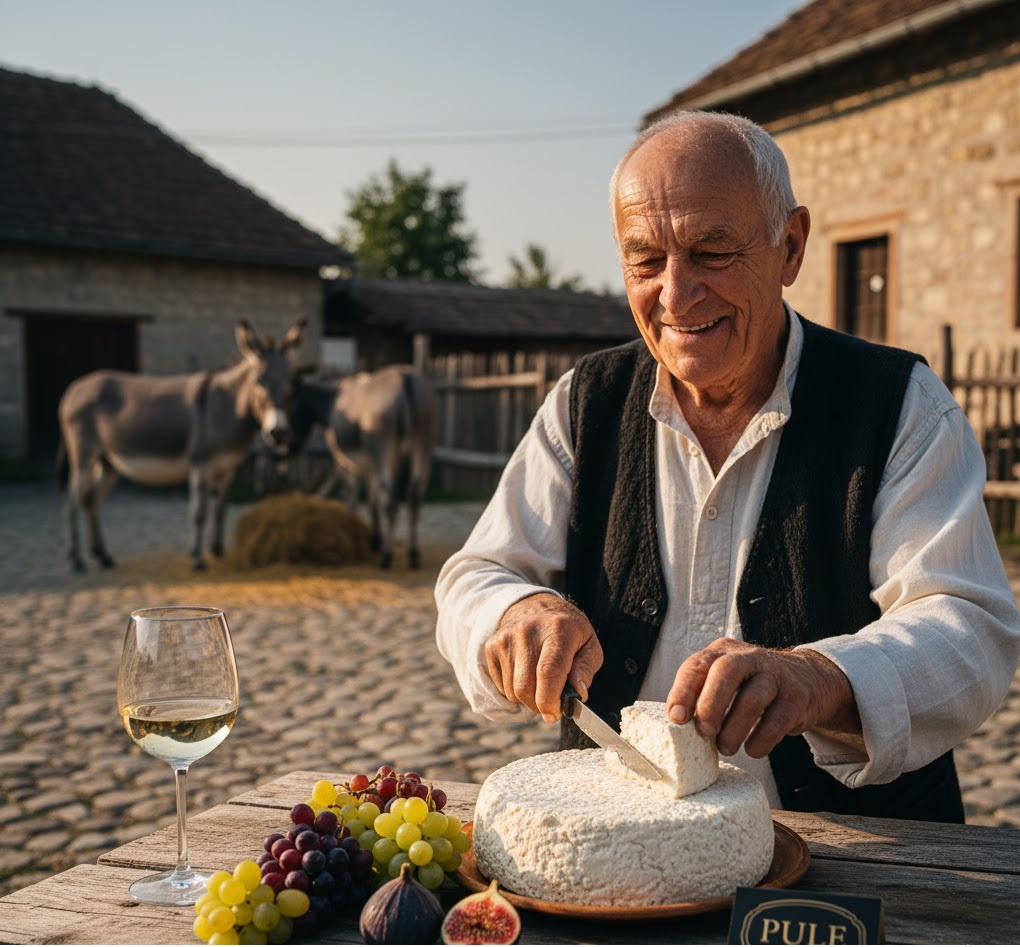
Pule is produced in exactly one place on Earth: the Zasavica Nature Reserve in west-central Serbia. This is not a choice made for marketing, but a necessity born of biology and history. The reserve, spanning over 1,800 hectares of wetlands, serves as a sanctuary for the Balkan Donkey, a breed that was once the heartbeat of rural Mediterranean life but faced total extinction with the advent of the industrial age.
The savior of both the donkey and the cheese is Slobodan Simić. In the late 1990s, Simić realized that if the Balkan donkey was to survive, it needed a modern economic purpose. By creating a market for donkey milk, he ensured that these animals were no longer seen as obsolete farm tools, but as precious biological assets. Today, the herd at Zasavica is a symbol of Serbian national pride and a beacon for sustainable, high-value agriculture.
Cultural Significance
The name "Pule" is deeply rooted in regional linguistic history. Derived from terms for a "young donkey" or "foal," it signifies the innocence and precious nature of the source. While the cheese is Serbian, its fame has revitalized interest in donkey-rearing traditions across the entire Balkan peninsula, from Albania to Montenegro.
The donkeys at Zasavica are far from industrial livestock. They live in a semi-wild state, grazing on over 100 species of indigenous herbs and grasses. This "natural foraging" diet is what imbues the milk with its complex, nutty, and slightly floral aroma. You cannot mass-produce Pule because you cannot mass-produce the pristine environment of the Zasavica marshes.
Latest From Our Blog
Dive deeper into the world of Pule and Zasavica through our professional articles. We regularly update our readers on farm life, production secrets, and the global luxury food market.
Saving the Balkan Donkey
An in-depth look at the conservation efforts that brought the Balkan donkey back from the brink of extinction...
Read More →Pule vs. White Truffles
Which is the ultimate luxury? We compare the two most expensive ingredients in modern cooking...
Read More →The Science of Milking
Why donkeys are the hardest animals to milk and the incredible patience required by our farmers...
Read More →The Impossible Craft: The Engineering of Pule
To the uninitiated, the price of Pule seems absurd. However, when you analyze the mathematics of its production, the price begins to look like a bargain. The primary obstacle is the 25-Liter Rule. It takes 25 liters of fresh, organic donkey milk to produce a single kilogram of Pule. When you consider that a high-yield dairy cow produces 30 liters in a day, but a donkey produces only 0.2 to 0.5 liters, the scale of the challenge becomes clear.
The Manual Labor of the Balkan Dairy
There are no machines in the world designed to milk a donkey. The process is 100% manual and requires a level of intimacy between the farmer and the animal that is non-existent in modern agriculture. Each jenny (female donkey) must be milked by hand three times per day. If the animal is stressed, she will simply refuse to yield milk. This necessitates a calm, quiet, and respectful farm environment—labor costs that are reflected in the final price of the cheese.
The Secret of the 60/40 Ratio
For centuries, it was believed that donkey milk could not be turned into cheese. It is naturally low in casein—the protein responsible for the "clumping" in cheesemaking—and high in whey proteins. It took years of patented research at the Zasavica farm to solve this puzzle. The solution? A meticulously balanced blend of 60% donkey milk and 40% goat milk. This ratio allows the donkey milk’s flavor and nutritional properties to dominate while the goat milk provides the structural integrity needed to form a firm, sliceable wheel.
The Sensory Experience: Tasting the Legend
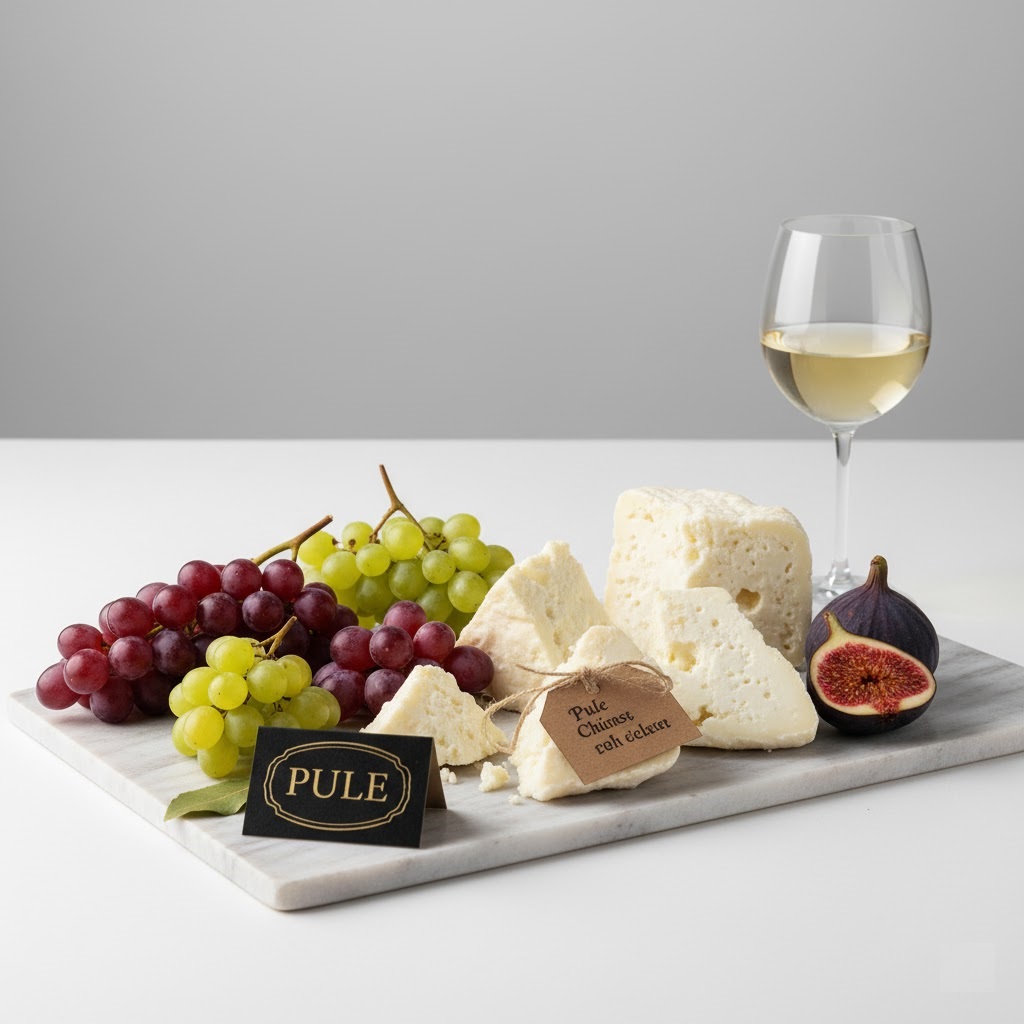
Pule does not taste like cow's milk cheese. It lacks the heavy, buttery fattiness of a Brie or the sharp, crystalline saltiness of an aged Parmesan. Instead, it offers a refined, clean, and nutty profile. Connoisseurs often note a subtle sweetness—a result of the high lactose content—followed by a refreshing acidity caused by the intense levels of Vitamin C.
The texture is unique: crumbly, white, and dense. It feels light on the palate but lingers with a sophisticated finish that hints at the wild herbs of the Serbian wetlands. It is a cheese that demands your full attention; it is not a topping, but the main event.
Economics of the World's Most Expensive Cheese
Is Pule worth $1,000? To the thousands of people on the waiting list each year, the answer is a resounding yes. The price is driven by four immutable factors:
- Biological Scarcity: With only a few hundred milking jennies in existence, the supply is naturally capped.
- Labor Intensity: Hand-milking and hand-pressing each wheel takes hundreds of man-hours.
- Geographic Exclusivity: The "Terroir" of Zasavica cannot be replicated elsewhere.
- Heritage Preservation: Every purchase directly funds the protection of an endangered species and a national park.
The Elixir of Immortality: Health & Chemistry
Long before it was cheese, donkey milk was medicine. Hippocrates, the father of medicine, prescribed it for everything from liver trouble to infectious diseases. Cleopatra famously maintained a herd of 700 donkeys just to provide milk for her daily baths. Modern science has finally caught up to these ancient traditions.
Donkey milk is chemically the closest animal milk to human breast milk. This makes Pule cheese uniquely bioavailable to the human body. Its nutritional profile includes:
- Vitamin C Powerhouse: Containing 60x more Vitamin C than cow's milk, it is a potent immune booster.
- Natural Antibiotics: High concentrations of lysozyme and lactoferrin help the body fight off pathogens.
- Anti-Allergenic: It is often the only dairy product that children with severe cow-milk allergies can safely consume.
- Low-Fat, High-Protein: It provides essential amino acids without the heavy saturated fats that lead to cardiovascular issues.
Expert FAQ: Everything You Need to Know
Can I cook with Pule?
Technically, yes, but it is considered a culinary crime. High heat destroys the delicate enzymes and subtle floral notes of the donkey milk. Pule should always be served raw, at room temperature, to preserve its $1,000-per-kg profile.
Is Pule cheese smoked?
Traditional Zasavica Pule is often lightly smoked using natural beechwood. This adds a layer of complexity to the nutty flavor and serves as a natural preservative, allowing the cheese to travel safely across the globe.
Why is it so much more expensive than Truffle Cheese?
Truffle cheese is usually standard cow's milk cheese with a small amount of truffle oil or shavings. Pule's base ingredient—the milk itself—is the rarity. You are paying for the liquid gold, not an additive.
Professional Inquiry
For media requests, educational partnerships, or deep-dive information regarding the Zasavica herd, our experts are available for consultation.